
Charges Successfully Dropped Against KCB11 Climate Defenders in Uganda
Kampala, Uganda – Global Climate Legal Defense (CliDef) welcomes the dismissal of charges against eleven climate defenders in Uganda over their peaceful protest of the East African Crude Oil Pipeline (EACOP). The dismissal, which occurred on Tuesday, Sept 29th, comes after 17 months of repeated delays and the prosecution’s failure to produce any witnesses to testify against the defenders.
CliDef, working closely with local counsel, provided strategic legal advice, ongoing support, and funding for legal expenses, without which these and other defenders would continue to be criminalized with no recourse.
On April 23, 2025, eleven Ugandan climate defenders entered the Kenya Commercial Bank (KCB) headquarters in Kampala to peacefully deliver a letter urging the bank to end its financial support for the East African Crude Oil Pipeline (EACOP).
The activists, now popularly known as the “KCB 11”, were led by the bank’s staff into the basement under the false pretense of a meeting. Security and the police, who were waiting for them downstairs, arrested them, and transported them to a local police station. They spent two nights at the station before being taken to the Nakawa Chief Magistrates’ Court. They were charged with criminal trespass.
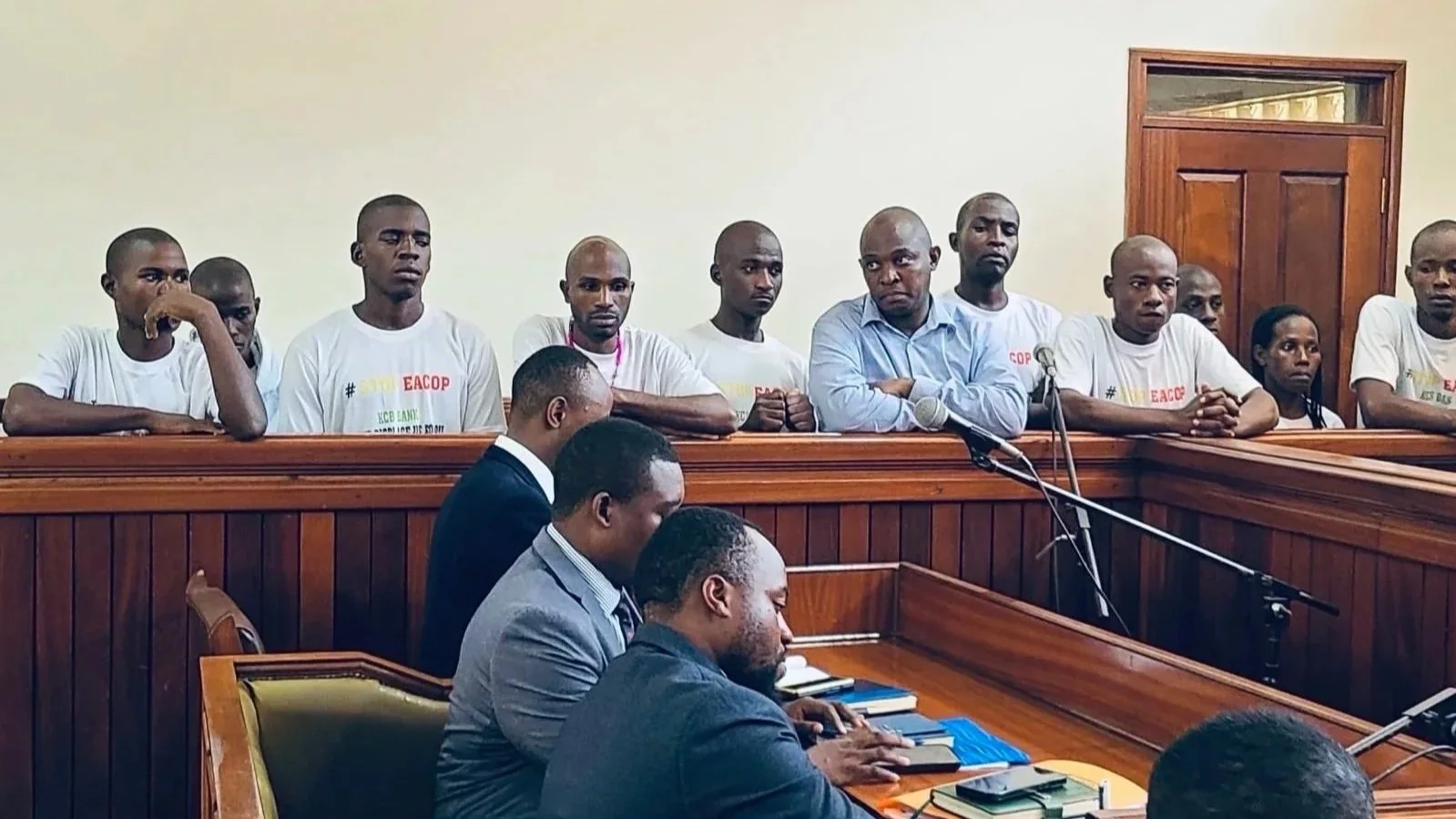
“As one of the 11 climate defenders arrested, we are happy to report that this ordeal is over,” said Bob Barigye, team leader of Activists for Climate Justice Initiative (A4C) in a video posted online. “We are sending a warning to the government that we know these charges were used to intimidate us and waste our time so that we would not mobilize any further. But we know, and the court confirmed, that speaking up should never be criminalized. We will not give up!”
The Office of the United Nations High Commissioner for Human Rights (OHCHR)’s official records show that the UN Special Rapporteur on the situation of human rights defenders and the Special Rapporteur on freedom of peaceful assembly and of association have issued joint communications to governments and corporate entities concerning the impacts of EACOP.
These communications, such as those issued on August 9, 2023 and July 3, 2023, detail patterns of intimidation, judicial harassment, and mass arrests of civil society members, students, and community organizers. The UN experts also expressed deep concern over activists being held past the legal 48-hour statutory limit without family contact or legal representation, identifying these events as an organized crackdown on speech regarding the pipeline's environmental and displacement risks.
"What we are witnessing in Uganda, with the ongoing crackdowns on EACOP protesters, is not an isolated incident; it is a manifestation of a deeply troubling trend that spans the African continent and echoes globally. Governments and corporate interests are increasingly weaponizing the judicial system, relying on mass, indiscriminate arrests, and prolonged pretrial detentions to exhaust and intimidate those on the frontlines of the climate crisis,” said Alfred Brownell, founding president of Global Climate Legal Defense (CliDef).
CliDef partners with the StopEACOP Campaign, giving climate defenders the security to know that lawyers have their backs should they experience legal reprisals for their advocacy. CliDef provides legal advice, aid, and funds for critical legal expenses. Advocates like the KCB11 face systematic efforts to silence dissent, and CliDef builds legal infrastructure enabling them to keep challenging harmful projects like EACOP.
“The case of the KCB 11—who were subjected to 85 grueling days in Luzira Maximum Security Prison, followed by a 17-month judicial ordeal without a single prosecution witness testifying—is a textbook example of the 'punishment by process' playbook. When peaceful students, community organizers, and climate defenders are criminalized simply for demanding environmental accountability, it threatens the very fabric of civic space everywhere. We must recognize these patterns for what they are, and the international community must stand unwavering in providing both moral and material resources to sustain the legal defense of these defenders,” said Brownell.
At 1,443-kilometers (nearly 900 miles), EACOP would be the longest heated oil pipeline in the world. If completed, EACOP would connect oilfields in western Uganda with the port of Tanga in eastern Tanzania, flowing through rural communities where 90% of households lack grid energy access. The oil itself will not serve the energy needs of Ugandans, but will be transported to refineries in Europe.