
With legal support, #StopEACOP movement delays construction of destructive crude oil pipeline
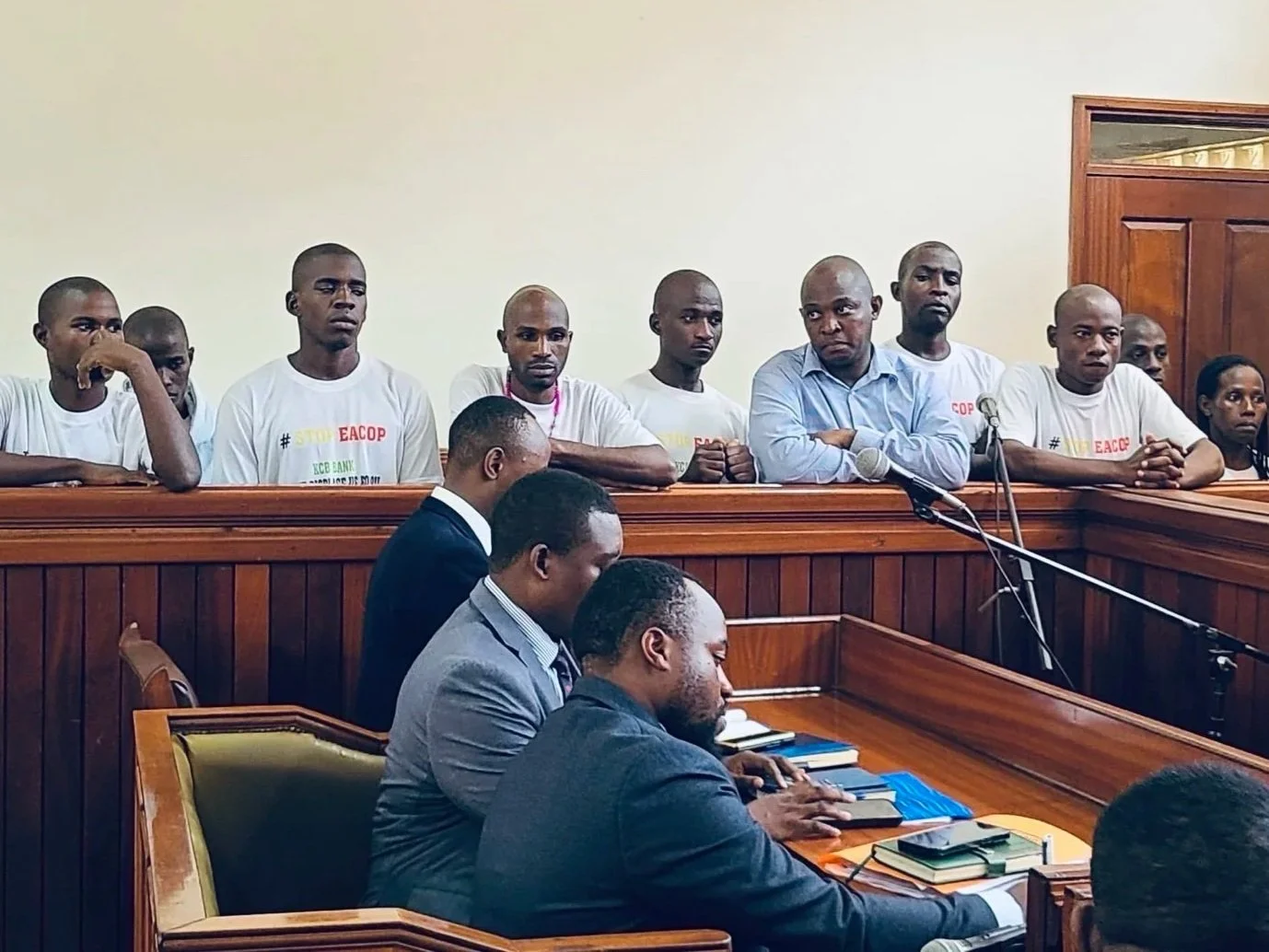
Earlier this year, on April 23rd, eleven young people peacefully walked into KCB Bank in Kampala, Uganda. In their hands, they had a message for the bank’s general manager: KCB must withdraw its financial support for the East African Crude Oil Pipeline (EACOP).
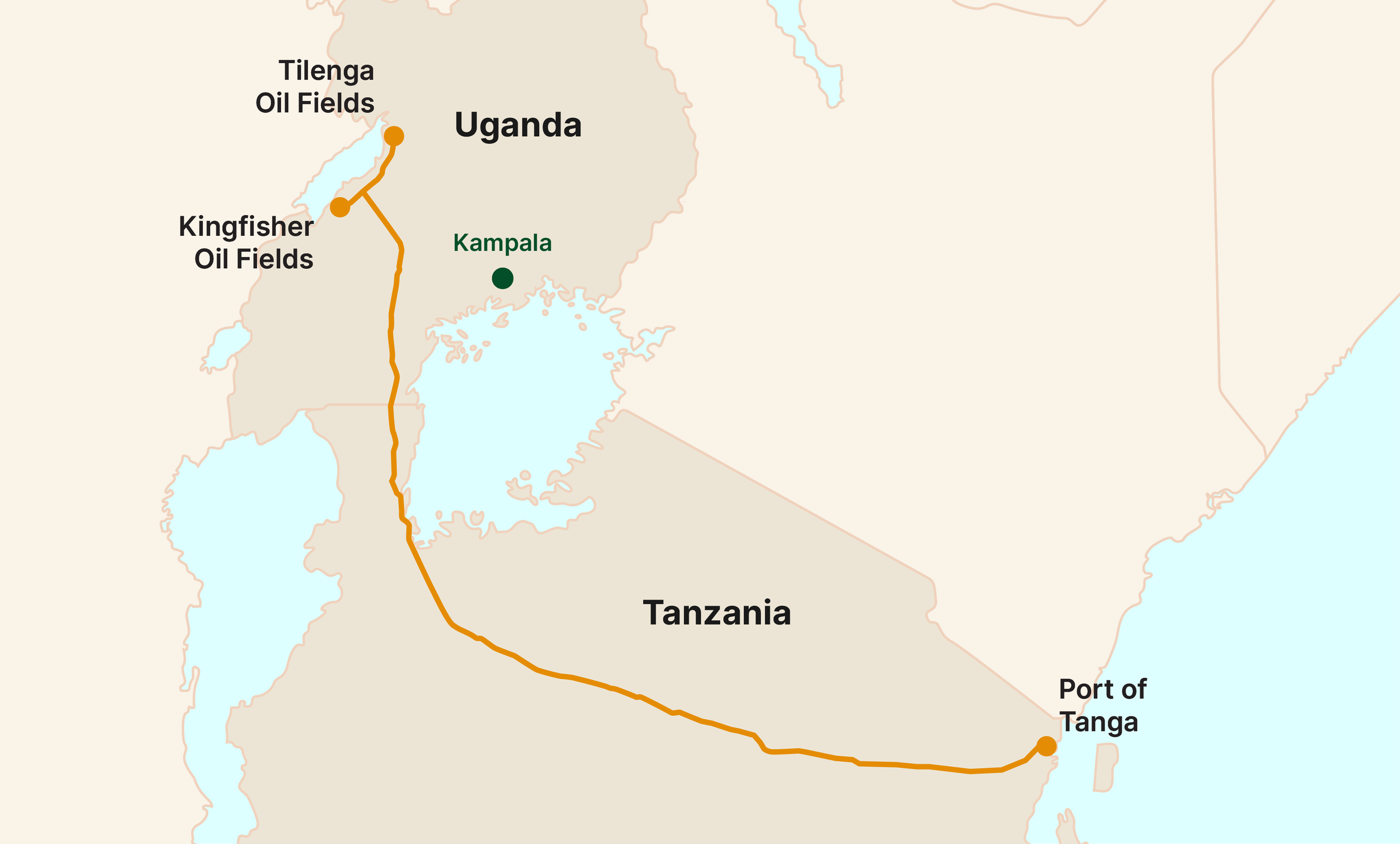
At 1,443-kilometers (nearly 900 miles), it would be the longest heated oil pipeline in the world. If completed, EACOP would connect oilfields in western Uganda with the port of Tanga in eastern Tanzania, flowing through rural communities where 90% of households lack grid energy access. The oil itself will not serve the energy needs of Ugandans, but will be transported to refineries in Europe.
KCB Bank, Kenya’s largest commercial bank, along with Stanbic Bank Uganda and Saudi Arabia's Islamic Corporation for the Development of the Private Sector, had recently injected cash into the controversial $5 billion crude oil pipeline. Several media reports about the investments noted that the funding boost would address delays in the pipeline’s construction, which has been under budgetary duress.
The activists, now popularly known as the “KCB 11”, were led by the bank’s staff into the basement under the false pretense of a meeting. Security and the police, who were waiting for them downstairs,. arrested them and transported them to a local police station, where they spent two nights before being taken to the Nakawa Chief Magistrates’ Court. They were charged with criminal trespass.
EACOP’s Divestment Movement Grows
The #StopEACOP movement, made up of students, activists and community members, frequently organizes non-violent demonstrations against the ambitious pipeline. If built, it is expected to produce around 1.7 billion barrels of oil from two Ugandan oil fields: the Tilenga Oil Fields at the northern tip of Lake Albert and the Kingfisher Oil Field at the southern end.
The pipeline carves its way through savannas, swamps, and countless natural reserves. As with any pipeline, it threatens the local environment and nearby communities with oil spills, which are particularly dangerous given that this part of East Africa, the Rift Valley, is prone to earthquakes.
Notwithstanding its climate impacts, EACOP has already started to displace what is expected to total over 100,000 people. The pipeline operators have promised to bring jobs, money, and a better life to local communities, but they have seen little tangible benefit. It is estimated that the pipeline will only create 200-300 permanent jobs.
A Just Finance report also found detailed evidence of forced evictions, violence against women, beatings, and extortion by Ugandan security forces along the pipeline’s construction route. Activists’ common critique of EACOP, that the pipeline is a casebook study of neo-colonial exploitation, is already coming true: resources are extracted from the land without consent or community benefit.
Despite facing ongoing crackdowns, arrests, and intimidation, #StopEACOP activists organize outside government offices, diplomatic missions, Parliament, financial institutions, and supporting banks to raise awareness and pressure decision-makers. Since 2022, over 200 people have been arrested in protests similar to the arrest of the “KCB 11.” CliDef and our local lawyers have secured the release of more than 200 of those unfairly arrested for their speech and expression, allowing climate defenders to continue to speak out.
Legal Support Emboldens Climate Defense
At Global Climate Legal Defense, we view legal support as critical to the success of the global climate movement – and to keeping oil and gas in the ground. When climate defenders are arrested, or face frivolous criminal and civil charges for non-violent civil disobedience, they are more empowered to continue their advocacy if they have trusted legal support.
Defenders must know that they have a lawyer to protect and represent them. That’s why CliDef has been building a legal team of more than a dozen lawyers in Uganda and several in Tanzania to respond to the waves of attack and reprisals as well as file affirmative suits.
In the case of the “KCB 11”, for example, all eleven youth were sent to Luzira Prison, Uganda’s primary maximum-security facility southeast of Kampala’s city center. It was there that Global Climate Legal Defense’s local lawyers argued that the KCB 11 were entitled to be released on bail and that detention for such a minor offense was unfair. After multiple delays in the court proceedings, the activists were eventually granted bail on July 17, 2025 after spending 85 days in prison
Additionally, with CliDef’s legal support, the #StopEACOP movement has filed lawsuits and petitions with domestic, regional, and international courts and parliaments, challenging the project's legality—especially regarding land acquisitions and insufficient environmental and social assessments. We are also helping prevent reprisals through tactics like embedding lawyers in protest planning meetings, developing risk-mitigation protocols, and holding after-action reviews.
Financiers and Insurers Respond to Public Outcry
Since Ugandan President Museveni laid the foundation stone of the pipeline in 2017, financing the megaproject has proved problematic for TotalEnergies and its partners, state-owned China National Offshore Oil Corporation (CNOOC), and the governments of Uganda and Tanzania.
Robust campaigns organized by a constellation of youth, students, and local communities in Uganda, Tanzania, the Democratic Republic of Congo, and their civil society partners abroad, have ultimately created construction delays and secured divestments by the pipeline’s financiers and insurers.
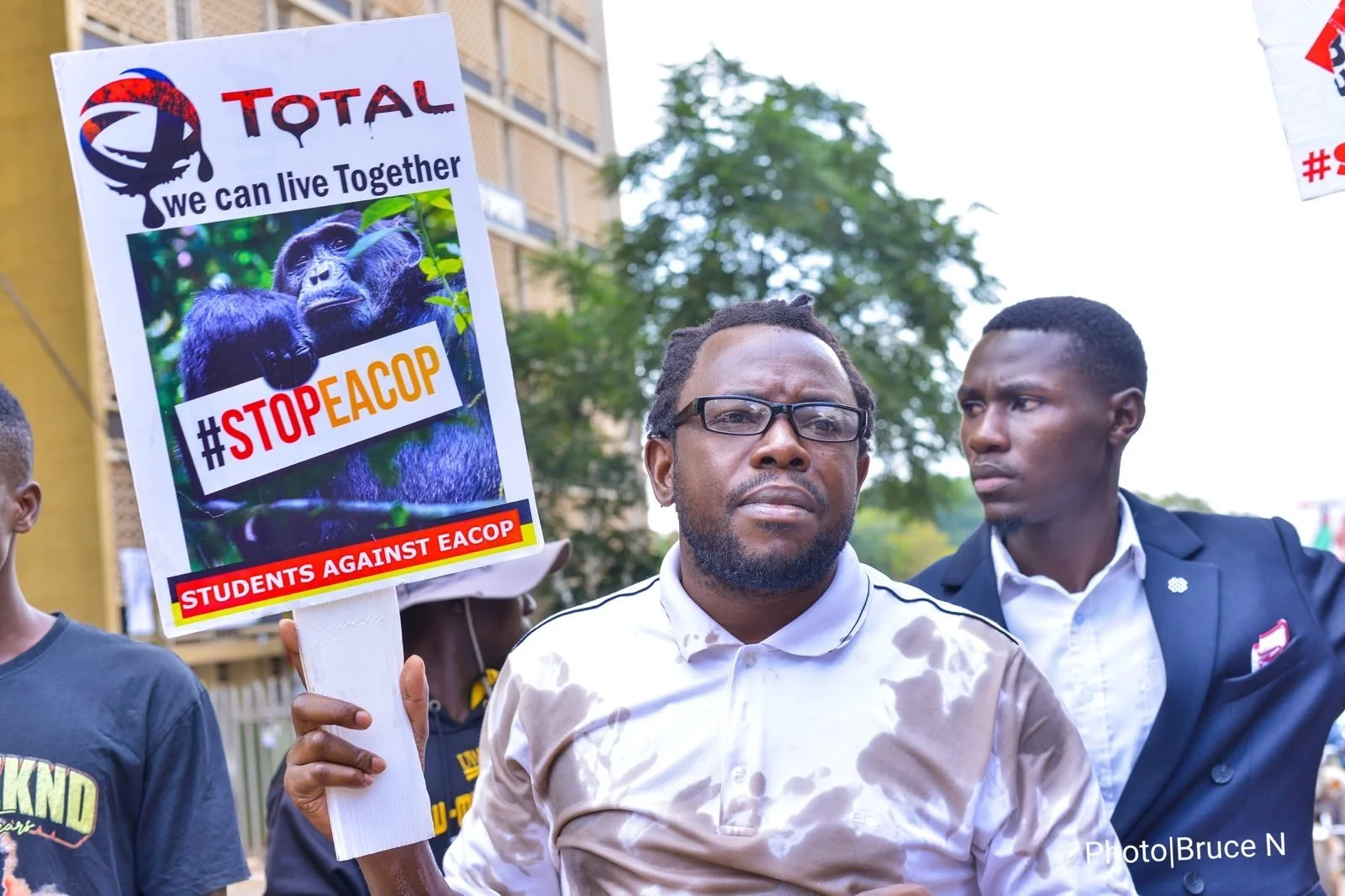
Over time, the Stop EACOP movement has also built trust with communities along the pipeline route by educating them about their rights and the long-term costs of the project. Their solidarity has been reinforced through partnerships with international NGOs and climate organizations, amplifying their collective voice. These sustained, multi-pronged efforts have attracted global attention and delayed or dried up funding as a result. For example, a total of 43 banks have ruled out financing, and more than 30 insurers and reinsurers have declined support for reasons ranging from reputational damage to human rights concerns.
Should the project move forward at all, it will be much more expensive than investors and developers originally realized. According to Banktrack, TotalEnergies and its partners will end up spending three times their originally planned contribution.
What’s Next?
This October, the board chairman of the Tanzania Petroleum Development Corporation announced that EACOP was 70% complete and on track to be completed in the summer of 2026. Ombeni Sefue stated that the project has “overcome financing and environmental challenges” that had slowed the pipeline’s construction down. China Exim Bank and Standard Bank Group, the largest bank in Africa, have added funding after Western banks pulled out.
The long fight to #StopEACOP is not over; the strategy just continues to shift. And new court battles have emerged in several cases filed across East Africa. Through it all, CliDef continues to be there—to support the campaign led by student activists, lawyers, NGOs, and others—securing their release from prison and providing ongoing legal support to their cases.